A breathwork session for your team, in English or Dutch. It is a concrete measure against work stress that fits the Dutch risk assessment (RI&E) and action plan for psychosocial workload. For stress reduction, focus and recovery: not a wellness experiment, but a well-founded measure.
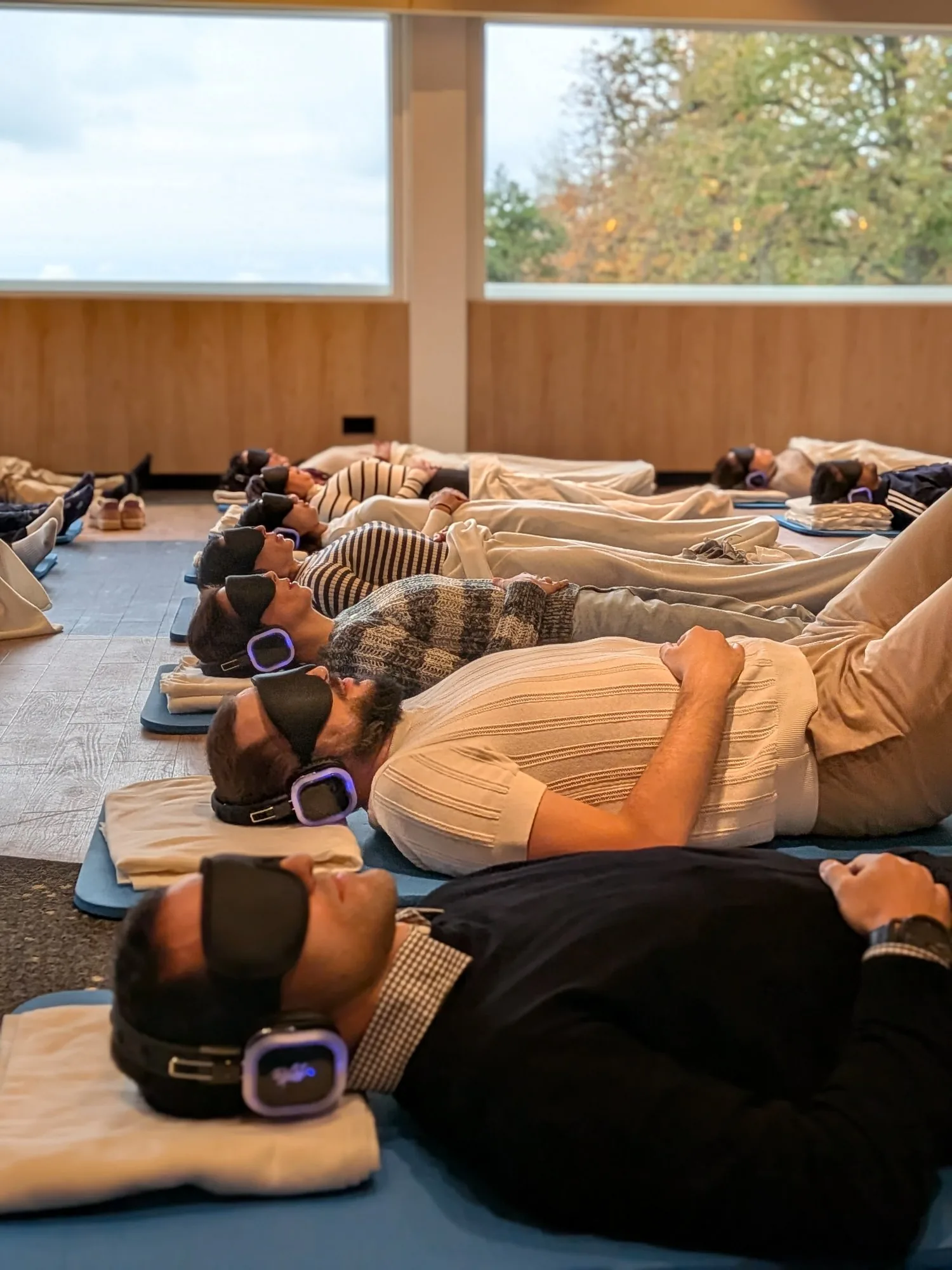
Give your team a session for the start of the new year. You order in December and receive the invoice this year, we come in January or February. Choose the introduction (€450) or the team session (€1,250 per half day).
You can order until Friday 11 December.
What until recently was filed under "wellness" is now on the balance sheet. A few Dutch figures that HR and wellbeing managers will recognise.
Estimated annual cost of sick leave related to work stress in the Netherlands (TNO, based on Arbobalans and NEA data).
Share of Dutch workers with burnout symptoms according to the National Working Conditions Survey (TNO/CBS, NEA 2024).
Werkgevers zijn verplicht beleid te voeren tegen psychosociale arbeidsbelasting (PSA). A well-founded group session can be one of the measures in it.
A team session is not a one-off team outing. It is a targeted measure that can fit the RI&E cycle (the Dutch risk assessment): identification, measure, evaluation. If it is in your action plan, it is a substantiated measure rather than a loose expense. Whether it qualifies for a targeted exemption under the Dutch work-related costs scheme (WKR) is for your occupational health adviser and payroll adviser to assess. The proposal describes the aim, content and evaluation clearly enough to make that assessment easy.
Reporting to an international head office? The same measure aligns with ISO 45003, the global guideline for psychosocial risks at work. The standard is not mandatory, but it shows that an organisation manages these risks in a structured way.
Breathing is the only function of the autonomic nervous system you can steer consciously, and the effect is measurable. In 2014, researchers at Radboudumc showed that trained breathing techniques demonstrably influence the autonomic nervous system and even the inflammatory response (Kox et al., PNAS). Research from Stanford Medicine in 2023 showed that five minutes of breathing practice a day improved mood more and lowered physiological arousal more than the same number of minutes of mindfulness meditation (Balban et al., Cell Reports Medicine). And slow breathing at around six breaths a minute increases heart rate variability, the standard measure of recovery capacity in sports physiology. That is why we explain in sessions what is happening: it does not work because you believe in it, it works because your nervous system joins in.
A team session takes half a day and has three parts: a short explanation of the nervous system and what breathing does to it, a guided group session of 45 to 60 minutes with music and eye masks, and a debrief with practical techniques the team can use straight away.
What stands out: the sceptics in the team often go deepest. No mysticism, no compulsory sharing round. But a physiological reset that everyone takes something from.
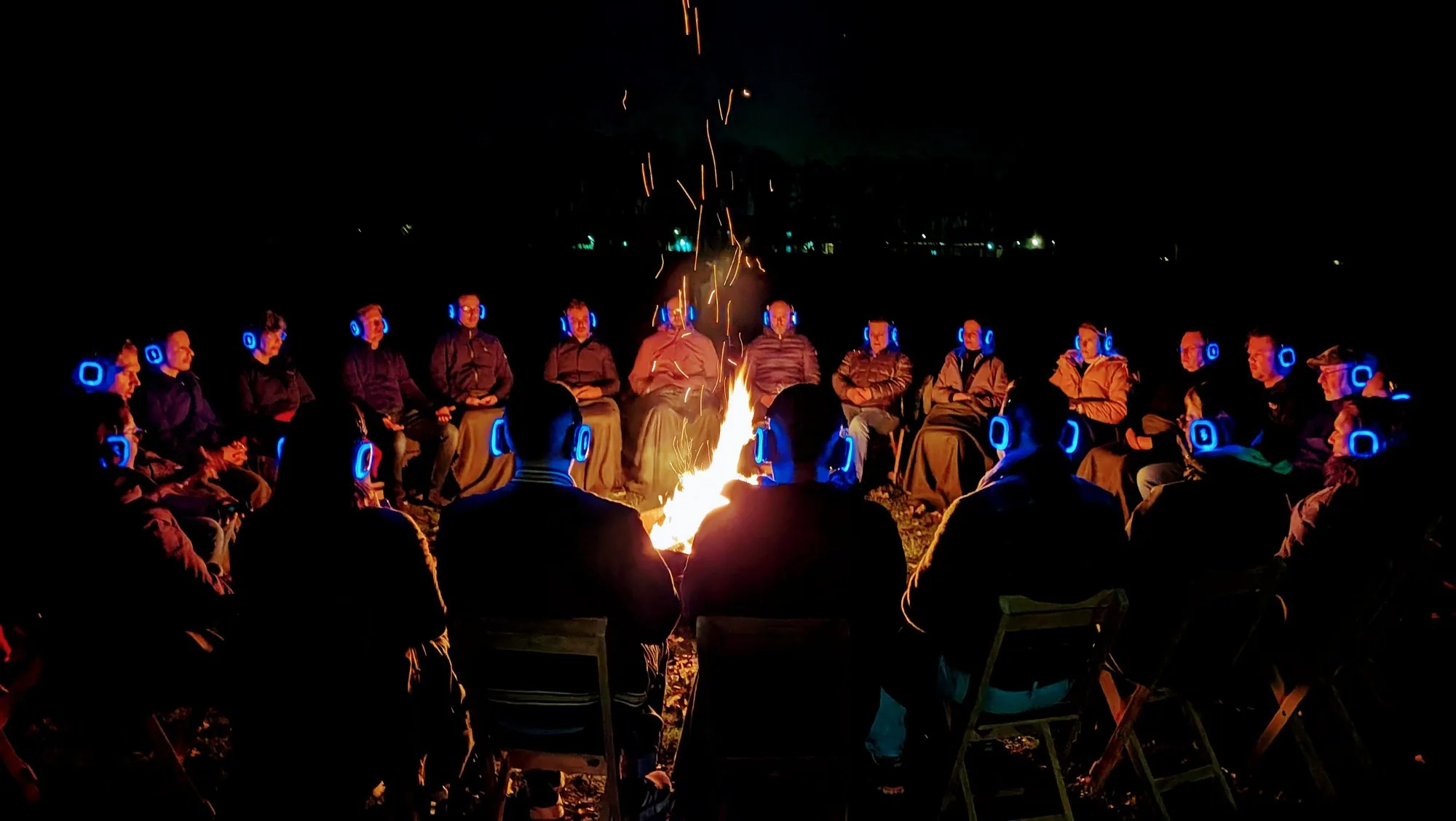
Location: your office or an external venue. Group size: 6 to 25 people for the best guidance. The session can be fully in English, which works well for international teams.
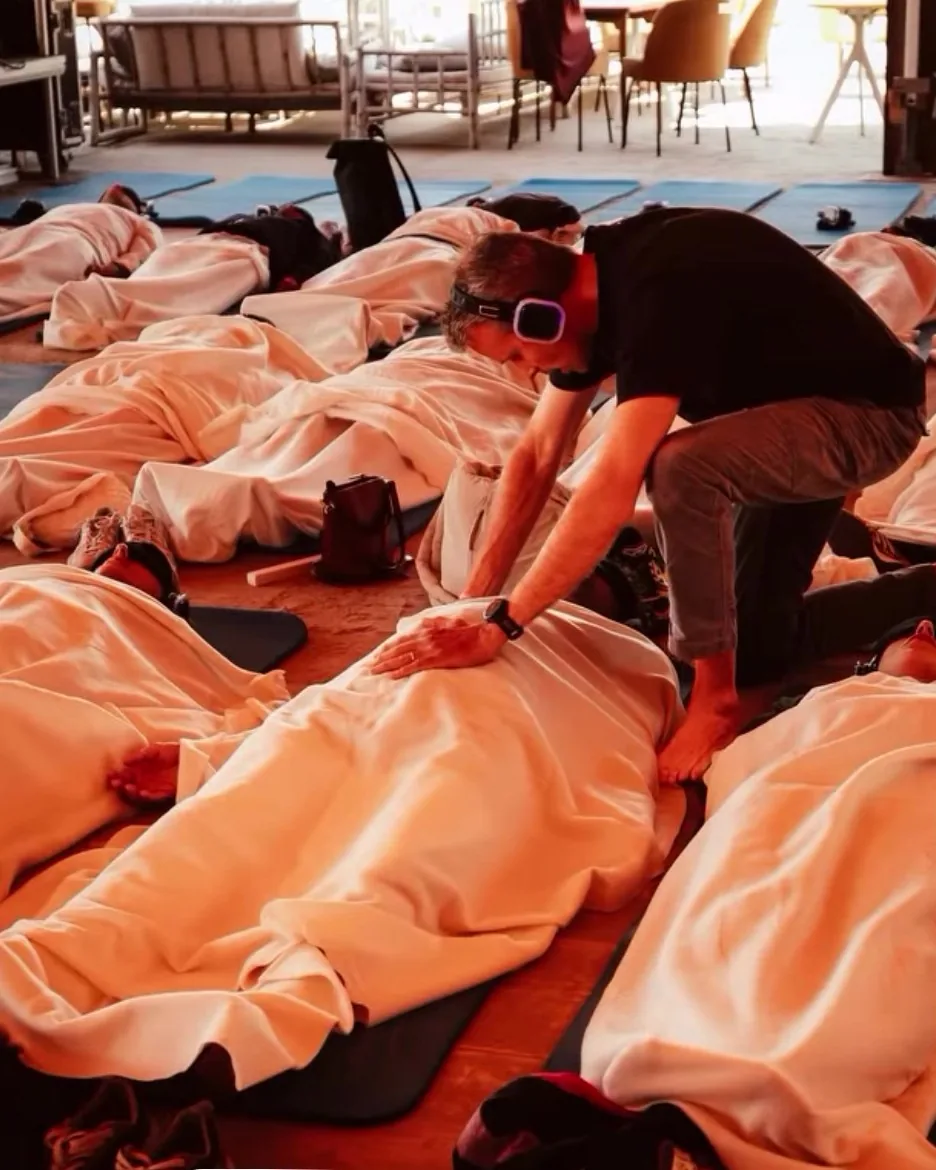
The sceptics in the team often go deepest.Team sessions · De Adempauze
Every programme starts with an intake in which we look at context, signals and goals. Then the session is built entirely around that.
One hour · on location, for example over lunch
Half a day · on location or online
One session, three months of guidance, measurable results
The quarterly programme by team size:
| Team size | Price | Per participant per working day |
|---|---|---|
| Up to 10 participants | €1,950 | €3.00 at 10 |
| 11 to 18 participants | €2,300 | €1.97 at 18 |
| 19 to 25 participants | €2,650 | €1.63 at 25 |
After that you can extend Ada for the whole team for €15 per participant per month, cancel monthly. That way one session becomes a lasting habit rather than a nice afternoon.
In the Netherlands a day of sick leave costs an employer €250 to €400 on average (ABN AMRO and MentaVitalis, 2023). The quarterly programme for ten people costs less than eight of those days.
Download the information pack (pdf, in Dutch)
Two pages to forward internally: approach, prices, RI&E and planning. An English version is available on request.
For Dutch employers: a session can be part of your approach to work stress in the RI&E. Whether it qualifies for a targeted exemption under the work-related costs scheme (Werkkostenregeling) is assessed by the employer per provision, ideally with your occupational health adviser and payroll adviser. The proposal describes the aim, content and evaluation clearly enough to make that assessment easy.
Taking part in any element is voluntary. An eye mask is optional. People who would rather observe are free to do so. The session is built to work for sceptics and experienced practitioners alike, without either feeling out of place.
Before the session we send a short questionnaire (5 items, based on standardised stress indicators). Two weeks later we send the same questionnaire plus a few open questions. The results are reported back to HR anonymously. In the quarterly programme, this measurement continues for three months.
A single team session can usually be scheduled within three weeks. The quarterly programme needs four to six weeks for the right set-up and briefing.
Yes. For management teams or conferences we give keynotes of 30 to 60 minutes, in English or Dutch. Ask about the keynote option when you request a proposal.
Tell us briefly what it is about: team size, context, preferred date. We will come back to you with a proposal within two working days, in English.
Request a proposal